

The Four Phases of the Real Estate Cycle And Where Minneapolis Duplexes Actually Sit
 It doesn’t take an economist to tell any of us there are clearly some signs of change in the Minneapolis and St Paul duplex, triplex and fourplex market. If you’re like me, you may be wondering not only what does that mean, but more importantly, what comes next.
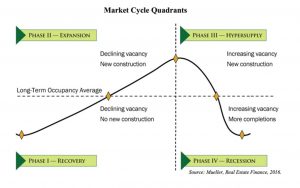
For more than a century, real estate in the United States has moved through a cycle of four phases:
Phase 1. Recovery. This happens when the economy is coming out of a recession. Occupancy and rents are low and new construction is slow, but showing signs of strengthening. This is when distressed duplexes and triplexes trade cheapest. Owner-occupant buyers find widespread acceptance of FHA or VA financing. This is usually the best window to buy a house-hack with low money down. Rents are usually soft during this phase, so it’s important to underwrite on the current rent roll, not what could be.
Phase 2. Expansion. Vacancy is low and rents rise as the market recovers. Demand outpaces supply as house hackers and investors bid on the same limited pool of inventory. There’s no new construction wave of 2-4 unit buildings to help ease the strain. Rent growth and appreciation work in owners’ favor, but sellers find FHA and VA loans less appealing, making it tougher for house hackers to field competitive offers.
Phase 3. Hyper Supply. Supply growth outpaces demand. Rent growth slows, but stays positive. Days on market grow, and sellers offer more concessions. Due to the constrained supply of 2-4 unit properties (not a lot of new ones being built), the small multifamily market often isn’t hit as hard as the apartment sector.
Phase 4. Recession. Supply outweighs demand. Vacancy rates start to climb, and as a result, rent growth often turns negative. Owner-occupants pull back as financing guidelines tighten. Cash flow buyers dominate the marketplace.
So where are we? Nationwide, it appears the single-family home market is moving toward Phase 3. In the 7-county metro, the single-family market is still in Phase 2.
Metrics in the small multifamily market suggest we are still in Phase 2, as the average vacancy rate for units sits around 4%, which favors housing providers. That means rents are still going up. At 5%, the rental market is balanced.
Anecdotally, however, it does appear duplex, triplex and fourplex sellers are starting to offer more concessions, like seller-paid closing costs, as part of a sale.
To me, this means we are either late in Phase 2 or early in Phase 3.
If you’re waiting for a “buyer’s market” to purchase a duplex, it’s important to remember most of the land in the Twin Cities is zoned for single-family homes. That means there won’t be so much new construction that there’s an oversupply. There may be more listings on the market, but for the most part, the same number of duplexes exist today as there were 10 years ago. That means prices may not drop as dramatically as they might in single-family homes.
And if you’re selling? While the market is relatively strong, and we are still seeing multiple offers on occasion, it isn’t what it was a year ago, let alone 5. Steps you can take to ensure you fare as well as you can if you sell include pushing rent increases close to or just below market rent, and making sure to address any deferred maintenance.
The one constant in life is change. It’s the one thing guaranteed to be on the horizon.