

You’re Not Buying a Minneapolis Duplex. You’re Buying a Payment
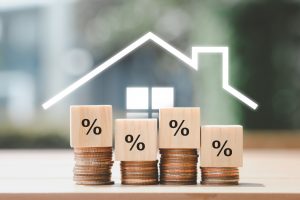 If it seems like Minneapolis duplex values might be softening a bit, you may be right.
The reason?
Buyers don’t purchase a property based on price. They buy it based on the monthly payment.
Here are the facts. Lenders qualify borrowers based on debt-to-income ratios tied to the payment, not the list price of the property. The interest rate is the mechanism that converts a given monthly payment into a loan amount.
When the rate goes up, the loan amount a given payment can support goes down, even though the buyer’s budget hasn’t changed.
This is why values compress when rates rise. It’s not that duplexes suddenly became less desirable. It’s that the pool of buyers who can afford them, on a payment basis, got smaller.
Here’s an example using a $400,000 loan on a 30-year fixed term, principal and interest only; no taxes, insurance, or PMI included, since those vary. At 3% interest, the monthly payment is $1687. The total interest paid over the life of the loan would be $207,300;
At 6.75% interest, the monthly payment jumps $907.97 to $2594.39. That’s an increase of 54%. Total interest paid if the property is held 30 years will be $533,900
Now run it the other direction. If a buyer’s budget is fixed at that original $1,687 monthly payment, that means they can now afford a $260,000 loan.
Same payment. About 35% less purchasing power than in 2021.
Rate isn’t the only thing that’s moved. Minneapolis property taxes have been climbing well ahead of inflation for years, which matters directly for cash flow on small multifamily property.
The Minneapolis City Council approved a 6.9% property tax levy increase for 2025, which was more than double the 2024 inflation rate of roughly 2.9%. The median homeowner saw an 11% property tax increase from 2024 to 2025, well above the levy figure itself.
Mayor Frey’s proposed 2026 budget calls for a 7.8% levy increase, with the city citing a need for 10.8% just to maintain current service levels before any new spending.
Over the past 20 years, the cumulative increase in total Minneapolis city property tax has been 204%.
It’s important to note I do not intend to pick on Minneapolis. St Paul and other cities around the country have experienced similar hikes.
Statewide, hail, wind, and severe storm losses across Minnesota largely drive insurance premiums, which have risen more quickly than taxes. As a result, in 2025, the state saw a 34% increase in insurance premiums, which was the highest in the nation.
Putting the pieces together: a mortgage payment that’s about 54% higher on the same loan amount, higher property taxes, and insurance that jumped 34% in a single year and you can see why some owners who bought in the 2021–2022 market may have a smaller pool of buyers than existed back then.
To be clear: this is not the broad state of the Twin Cities duplex market. Structural undersupply of 2–4-unit properties has historically made this segment more resilient than the single-family market.
If you’d like to get a current, payment-based valuation of your duplex, triplex, or fourplex, give me a call. I’d be happy to help you know where you’re at.